
Duo's Design: The Making of an Original Jewelry Line
Duo's Design is the original-design line inside Glint & Grain: small-batch pieces, each designed and hand-strung by Duo in her Shanghai studio, from materials she chooses herself. Every piece is made one at a time and never scaled into a production run, and the collection is still growing — new designs are added as they are ready.
Behind the collection are more than ten years of making jewelry — first for friends, then for people she had never met — and, before that, an art degree and more than twenty years of teaching art. This is how the collection came to exist, and what it takes to make each piece.
What She Designs For: How It Looks, How It Feels, What It Costs
Duo's pieces are made to be worn with whatever the day already holds — a change of mood, a different outfit, the same necklace doing a different job on a Tuesday than it did on a Saturday. That is why the collection leans on colour and arrangement rather than on a statement piece that only works once.
She works to three priorities, in this order.
- First, how it looks and how it makes you feel. A piece of jewelry has to be beautiful before anything else. The colours have to work together, the proportion has to sit right on the body, and putting it on should change something in the wearer's mood. That is the point of it.
- Second, materials that come from nature and feel good against the skin. Pearls, gemstones, shell, and metal with a warm lustre, each one named honestly on its product page.
- Third, a price that stays reachable. Pieces range from USD 39 to 99. Keeping the collection small and the making simple is what holds them there.
The design work itself arrives in small shifts rather than big ideas. Colours move, the arrangement changes, a strand gets shorter — and what looked right last season is adjusted into what looks right now. That constant small revision is the actual design process.
Three pieces are in the shop now; the rest of the collection is being made.
Art School, and Then Teaching
She studied art, and she taught it for more than twenty years — long enough to know how a beginner's hands move, how patience works, how a finished object teaches its maker something the plan could not.
Teaching gave her two things that show up in the jewelry. The first is composition: how a row of beads balances, where the weight should sit, why a strand needs one note of contrast rather than three. The second is knowing when to work with the material instead of against it. A stone may arrive in a shade deeper than expected, or a bead slightly wider than the rest, and forcing it into the original plan only makes the whole look wrong. The arrangement is changed to suit what the material already is.
Encouragement, From Friends and From Strangers
It started at friends' gatherings. Duo would arrive wearing a necklace and earrings she had designed herself, and friends who did not yet know they were her own work would lean in and ask where she had bought them. That question, asked in her own circle, was the first sign that the pieces worked on people who had no reason to be kind about them.
Later it happened in shopping malls, often, with people she had never met — a stranger would come up and ask about the necklace she was wearing, and when she said she had designed and made it herself, the surprise was immediate, followed by praise that kept coming. Ten years on, that is still the thing that carries the work forward: not a plan, but people asking where they can get one.
Both kinds of encouragement mattered, for different reasons. A friend's praise is generous, but it comes partly from knowing the person. A stranger's question carries no such obligation. It means something in the work itself reached someone who owed her nothing — and that is the kind of signal that makes a person keep going.
For most of those years the work stayed on the side of a desk, made in the evenings and at weekends around a full schedule. Small batches, one at a time, with the slow accumulation of small decisions that eventually becomes a style.
From Weekend Work to a Designed Collection
The point of change was Glint & Grain. Once the brand existed — a designer jewelry label from the Kris Nature studio, with a name, a mark, and a standard of honest material labeling — the pieces needed a home, a language, and a way of being described accurately to people who would never meet the maker.
That is what Duo's Design is. It is not a range assembled from a supplier's catalogue. Every design starts with her, is assembled by hand, and is finished in one piece or a small batch. When a design is done, it stops. It does not become a mass-produced item.
What Makes These Pieces Different
- Designed, not sourced. The arrangement — where the colour sits, how the weight falls, which bead breaks the rhythm — is an authored decision, not a default pattern.
- Colour first, and made for everyday. Duo's Design works mainly through colour pairing, in materials that come from nature — built to sit easily with what you already wear on an ordinary day.
The Collection Today
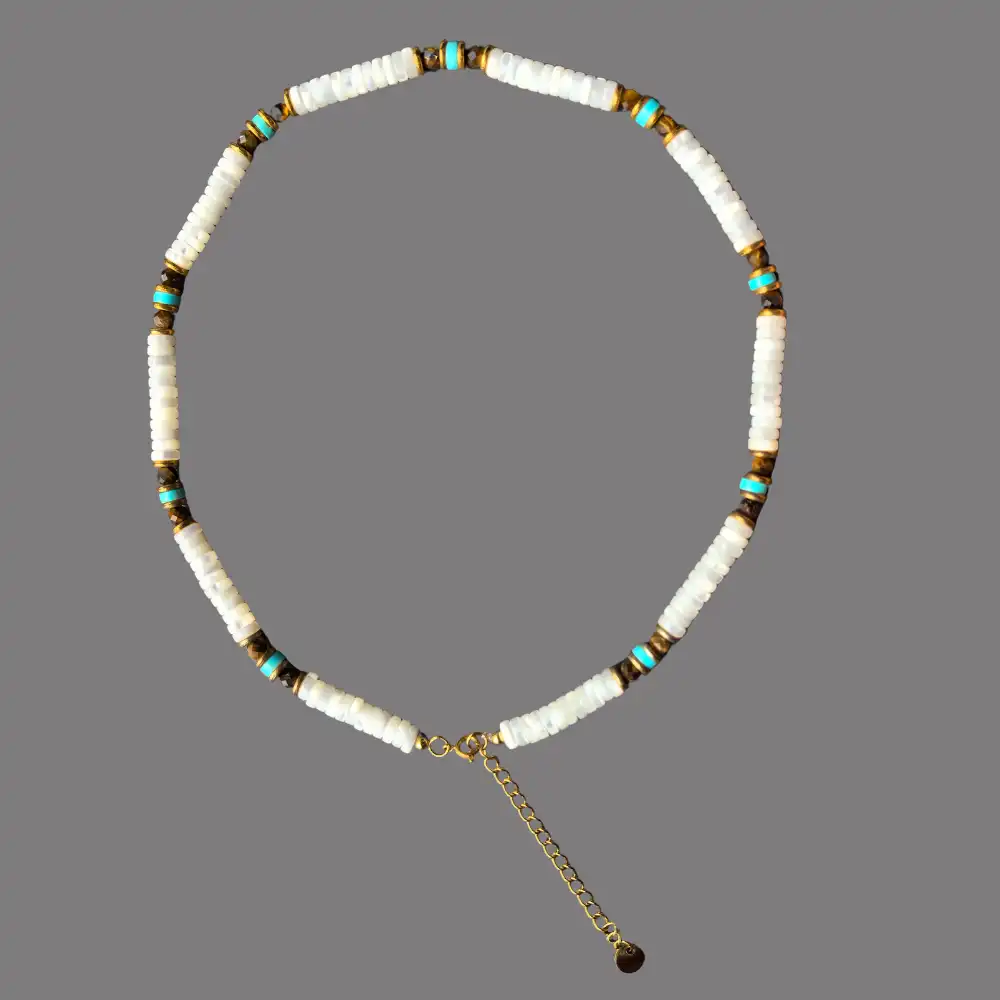
These three are in the shop now, and each one shows a different side of the same hand. Trochus is a natural shell prized for its pearly white discs; Duo sets them against turquoise and gold so the pale surface carries the colour.
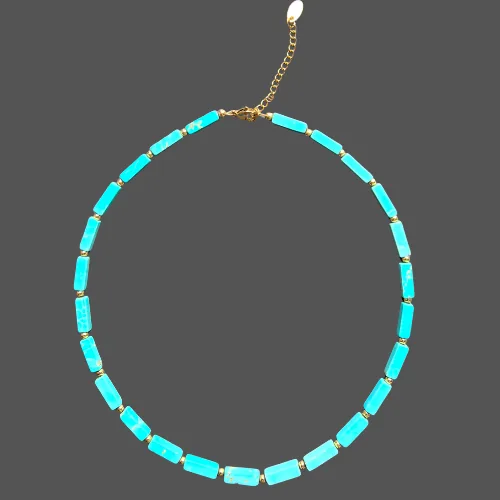
- Magnesite Turquoise Necklace
Magnesite tube beads, gold-tone spacers, copper-gold plated clasp.
A bright turquoise-blue strand with a steady rhythm of gold — the collection's most graphic design. - Trochus Shell & Tiger’s Eye Choker
Natural trochus shell discs, turquoise magnesite, tiger's eye, copper-gold plated spacers.
Pale shell against deeper colour — a quieter, more layered strand at 39 cm with an extender. - Garnet 3-Wrap Bracelet
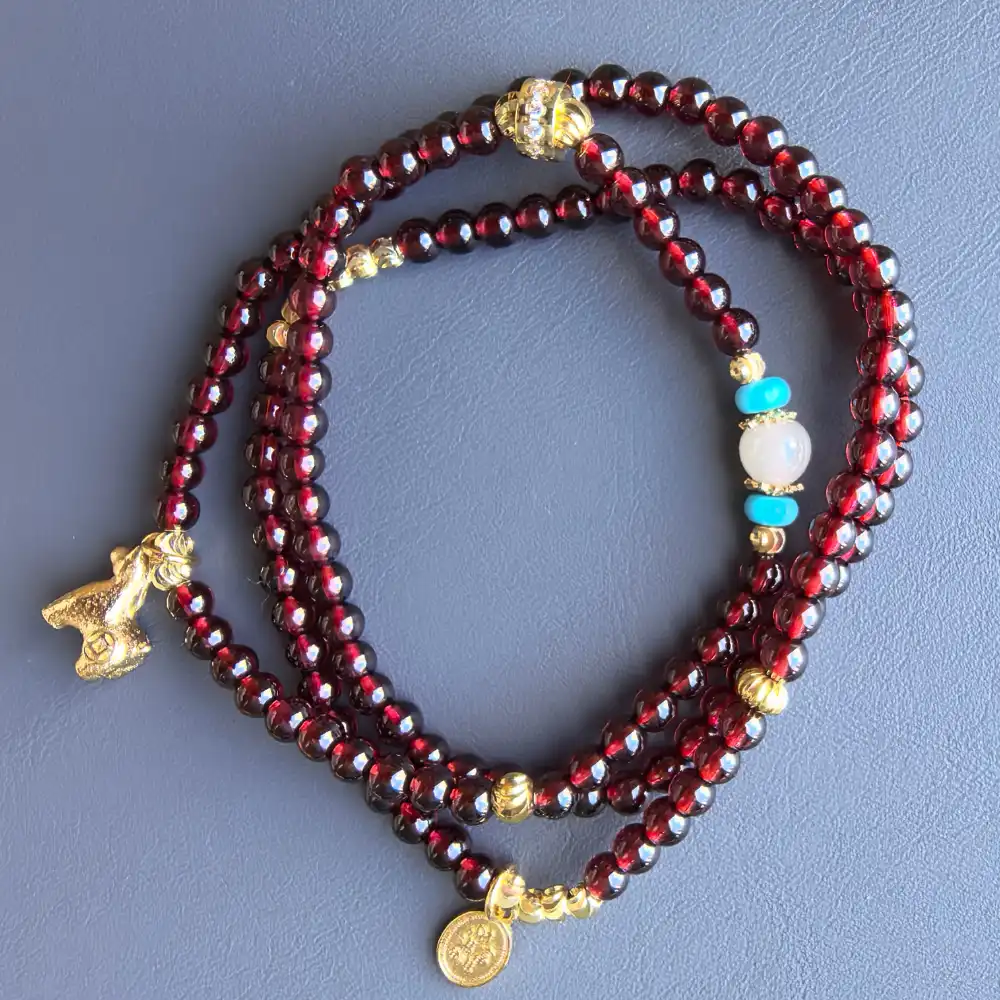
Natural garnet, magnesite turquoise, crystal, copper-gold plated horse charm and medallion.
A three-wrap stretch bracelet with charms — the collection's most personal, gift-ready piece.
How a Piece Is Actually Made
There is no production line. A design moves through the same steps each time.
- Material selection. Beads are chosen by hand — colour, size, and how they behave next to each other. Two strands of the same design can differ in the depth of a single colour, because the stones differ.
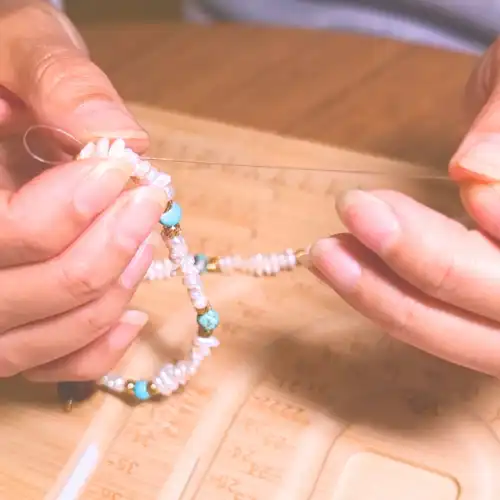
- Layout on the board. The arrangement is laid out and adjusted until the weight and the rhythm feel right. This is where most of the time goes, and none of it is visible in the finished piece.
- Assembly. Strands are strung and finished by hand, with the clasp and extender fitted at the end.
- Check and record. Each piece is checked for finish, and recorded — so that when someone asks about a specific design later, the answer is real.
What Duo Wants the Work to Do
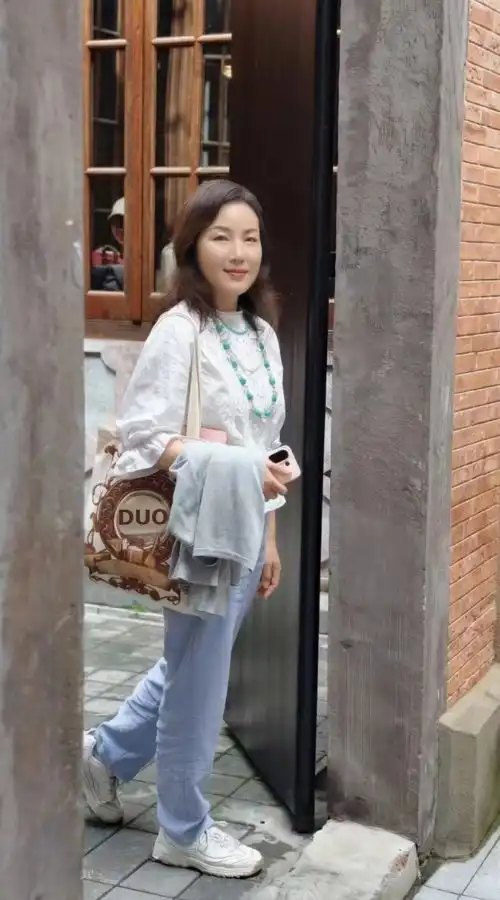
Ask Duo what she hopes the jewelry does, and the answer is not about sales or about being discovered. It is simpler than that: she would like more people to enjoy what she makes. Not admire it from a distance — wear it, and feel something while wearing it.
That comes from a belief she holds about jewelry in general. A piece of jewelry is not only an object to look at. It is something worn on a day when you need to feel like yourself before a meeting, or on a morning when you want a small reason to feel put together. A necklace or a pair of earrings can carry that kind of weight, quietly, without anyone else needing to know why it was chosen that day.
So the aim is not to dress anyone up as someone else. It is the opposite: a piece should help a person feel more like themselves. Confidence, in this sense, is not something a stone can give you — but the act of choosing something and putting it on can be a way of reminding yourself who you are.
Why the Collection Is Small on Purpose
A collection this size is a choice, not a limitation. Each design has to earn its place: it has to be different from what is already there, and it has to be something Duo wants to make more than once.
The alternative — a catalogue that grows by adding whatever sells — produces a shop where nothing means anything. Three designs that each say something is a better position than thirty that do not.
Questions People Ask
Who designs Duo's Design pieces?
Duo designs them. She studied art, taught it for more than twenty years, and has been making jewelry for more than ten years — first for friends, then for people she had never met. Every design in the collection starts with her.
Is Duo's Design the same as Glint & Grain?
Duo's Design is the original-design collection inside Glint & Grain, the designer jewelry brand from the Kris Nature studio. Every piece in it begins as Duo's own design.
Are the pieces handmade?
Yes — hand-strung and finished in one piece or a small batch. A design is never scaled into a mass-produced run, which is why some pieces are made to order.
Will my piece look exactly like the photo?
The design is the same. The materials are not identical — natural shell, garnet, tiger's eye and dyed magnesite vary in pattern and shade from piece to piece. That variation is the material, not a defect.
Why are there only a few designs?
Because each one has to be worth making. The collection grows slowly, and only when a new design adds something the existing pieces do not already say.
Can I request a custom size?
Yes. Any design in Duo's Design can be made to your measurement — strand length, wrist size, or a small change to the arrangement. Email [email protected] with the piece you have in mind and the measurement you need, and please allow a few extra working days for made-to-order pieces. Standard lengths and sizes are listed on each product page.