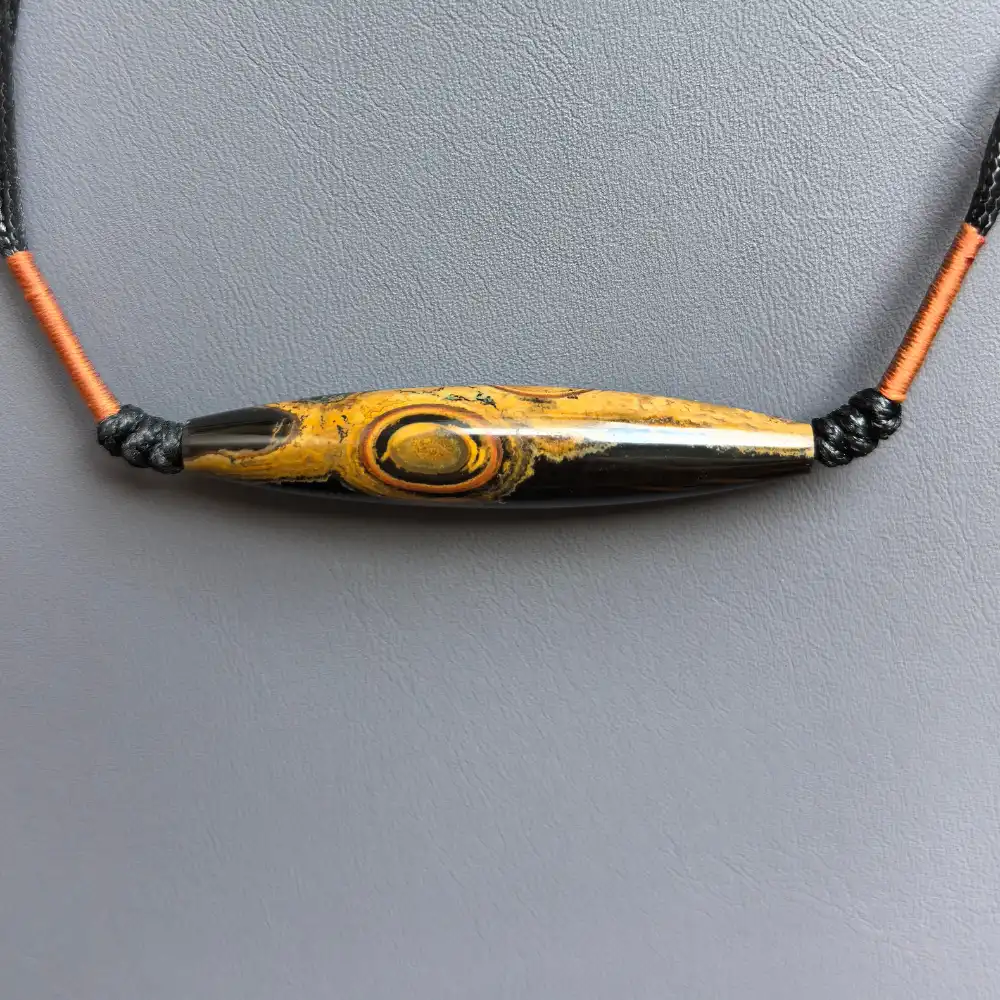
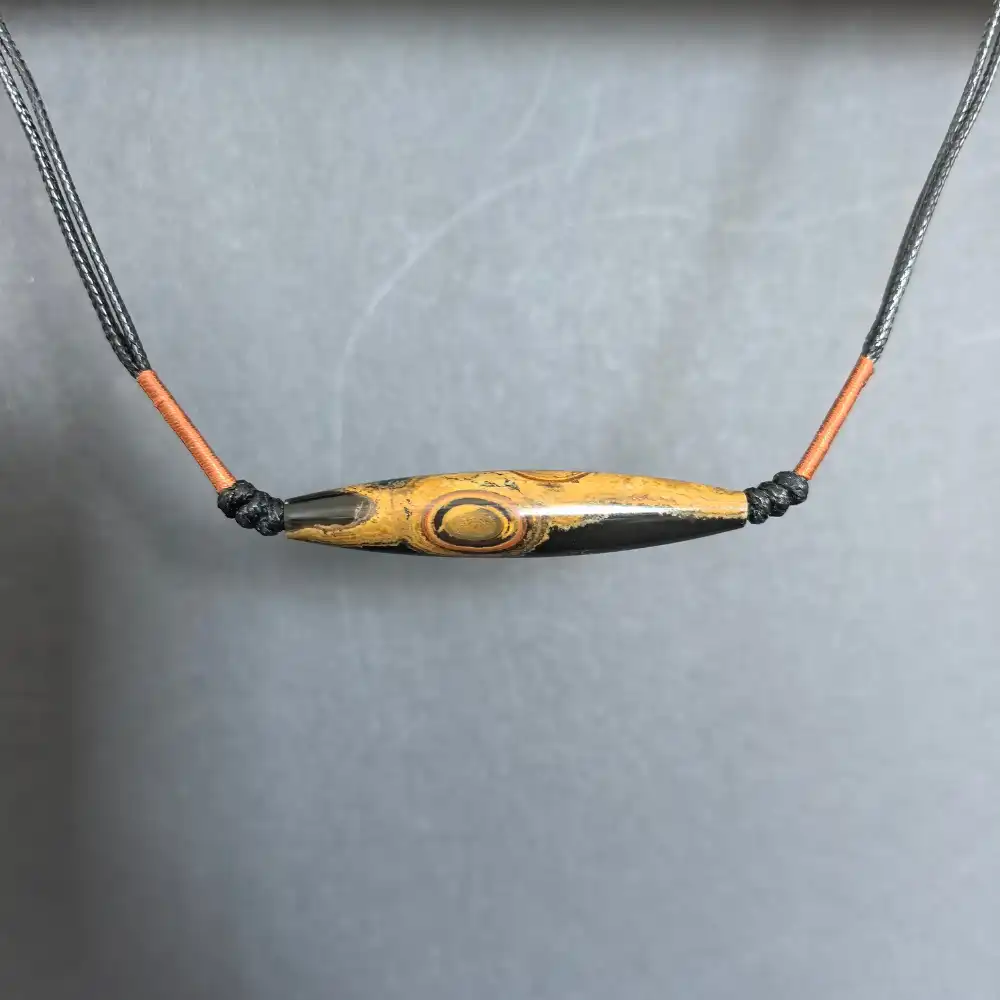
🤍 Awareness 🤍 Protection 🤍 Focus 🤍
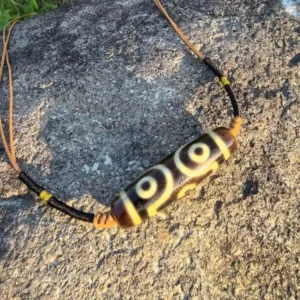
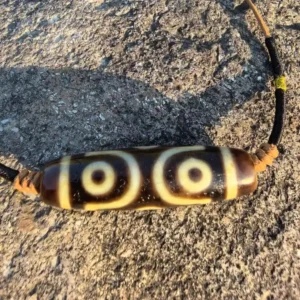
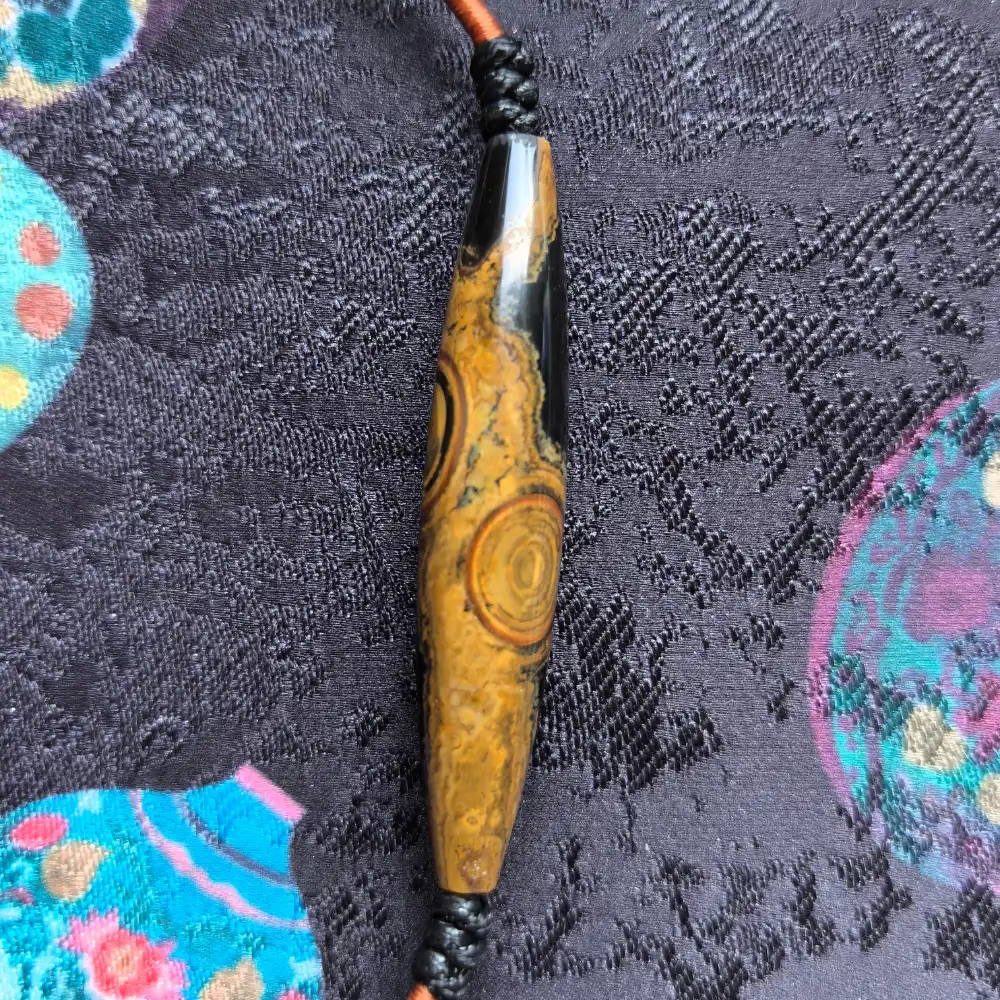
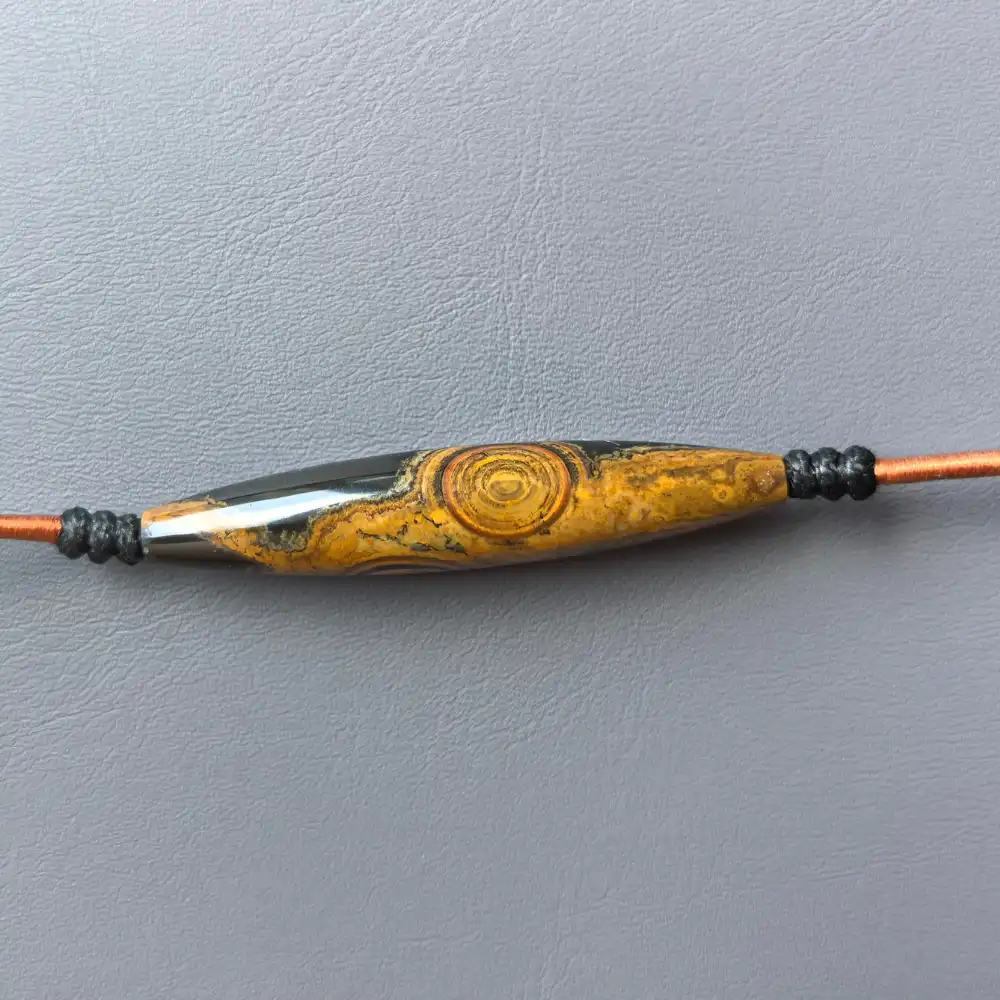
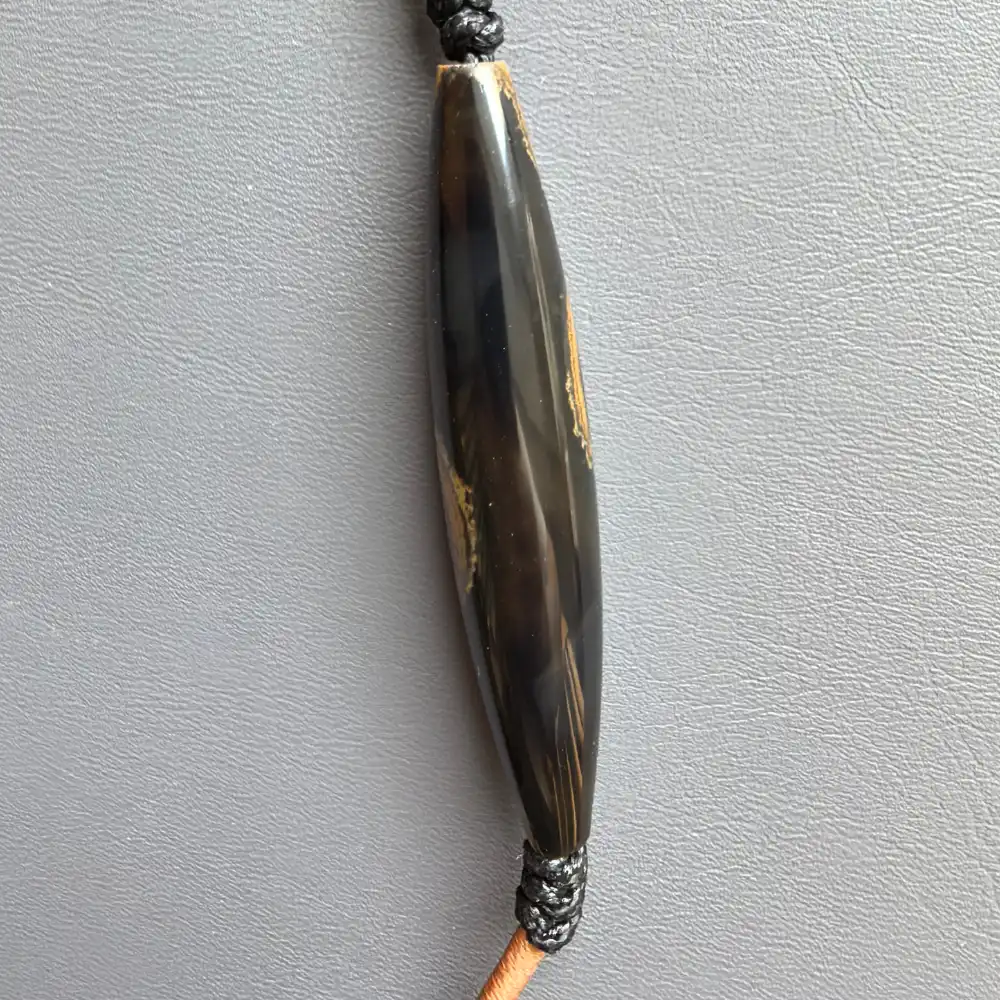
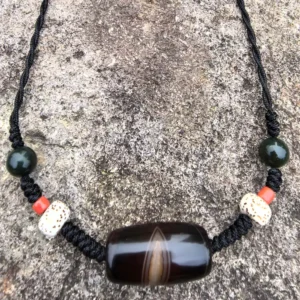
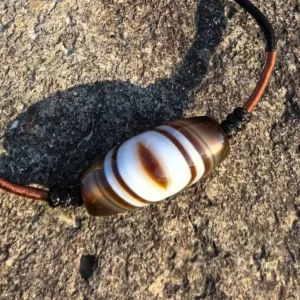
This lance-shaped lezi pendant belongs to the Mongolian Dzi family — specifically the natural eye-stone (nine-eye shale) variety. Carved from natural Mongolian eye-stone (coin stone, 九眼石页岩), it forms two complete concentric eyes created entirely by geological mineral deposition over millions of years. Rich ochre-gold, rust-red and deep black eyed banding wraps the slender leaf-shaped body, both ends transitioning to a glossy black stone. Strung on a hand-braided black cord with copper-toned thread wrap, designed to rest as a choker at the collarbone. It is a genuine one-of-one stone made for collecting: nature wrote the pattern, our workshop only shaped it. Such naturally eyed raw material is increasingly scarce, as the local authorities in Inner Mongolia have moved to rigorously protect these deposits and to stop their unauthorized digging.
The Stone: A Pattern Geology Wrote Once
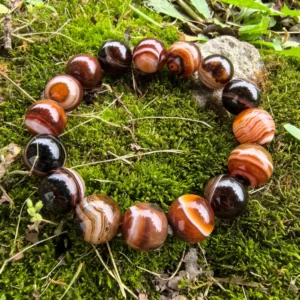
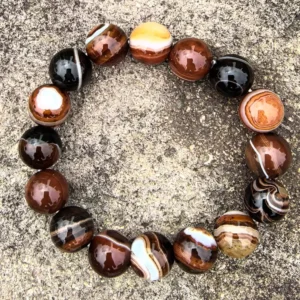
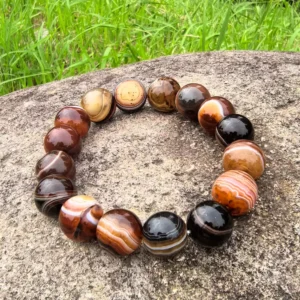
This pendant is cut from natural nine-eye shale — a chalcedony-family stone in which silica-rich fluids filled ancient cavities layer by layer, with iron and manganese tinting each concentric eye over millions of years. The two eyes on this piece are geological records, not decoration added later: no artisan drew them, and no machine printed them. Its sister variety in the Mongolian Dzi family, Alashan banded agate from the Gobi’s Alxa desert, wears flowing honey-toned layers instead of eyes — see the wider family in our Mongolian Dzi collection.
The colors here are exactly as the stone was found — as-found and untreated, with no heat treatment and no color enhancement. What you see is geology’s own palette: ochre-gold, rust-red, and deep black laid down underground.
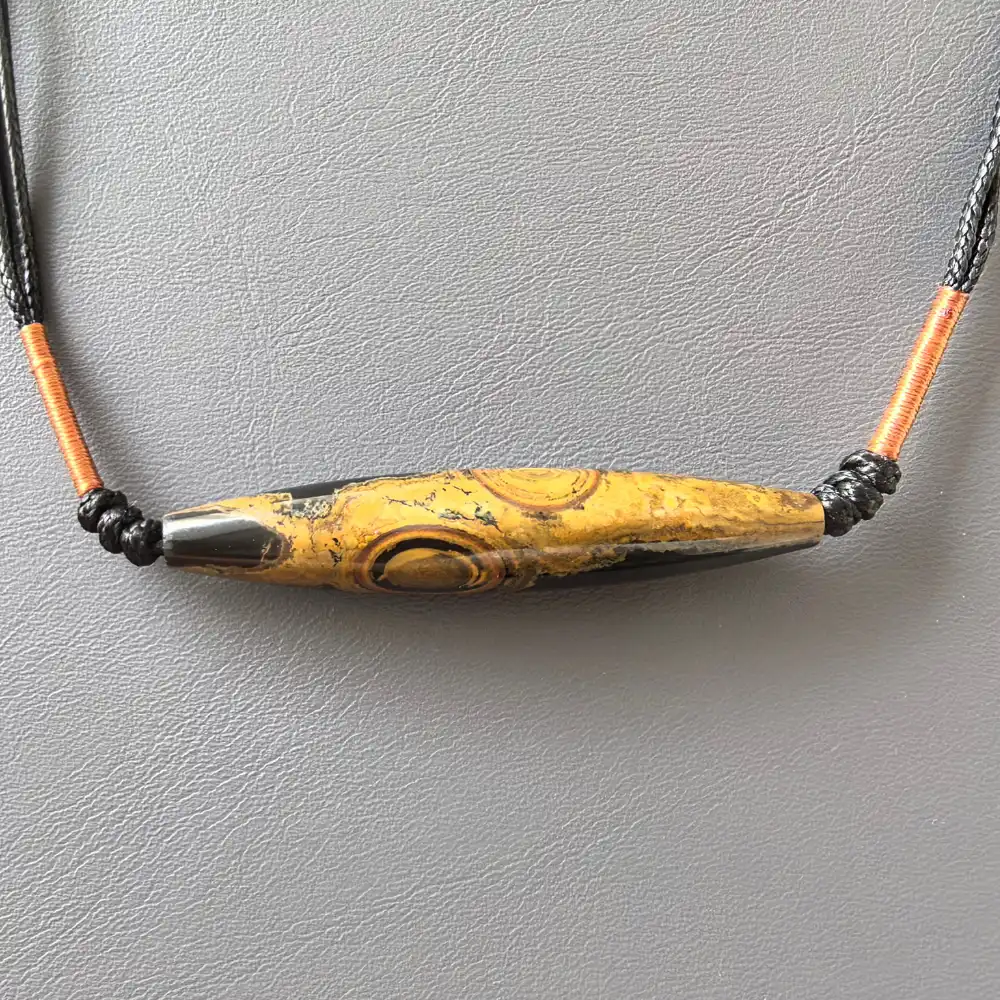
The eye pattern and the color are both natural — formed underground, untouched after polishing.
Two-Eye Meaning & Symbolism
The eye motif is among the most enduring in Himalayan and East Asian stone traditions. Two eyes are associated with duality and balance, and with the idea of seeing clearly — inward and outward at once. In regional folk tradition, eye stones are worn as ornaments of awareness, focus, and steady insight. These are cultural and symbolic associations, not guaranteed effects.
The Stone & Cord
- Family: Mongolian Dzi — the natural eye-stone (nine-eye shale) variety, pattern formed by geology.
- Stone: Natural Mongolian eye-stone (coin stone, 九眼石页岩). Two eyes fully geologically formed; honest “natural stone” label.
- Origin: Inner Mongolia. Local authorities actively protect these deposits and prohibit unauthorized digging, making well-formed natural eye material increasingly rare.
- Shape: Long lance / leaf-shaped lezi bead, both ends glossy black.
- Pattern: Layered concentric eyes in ochre-gold, rust-red and deep black; unique to this piece.
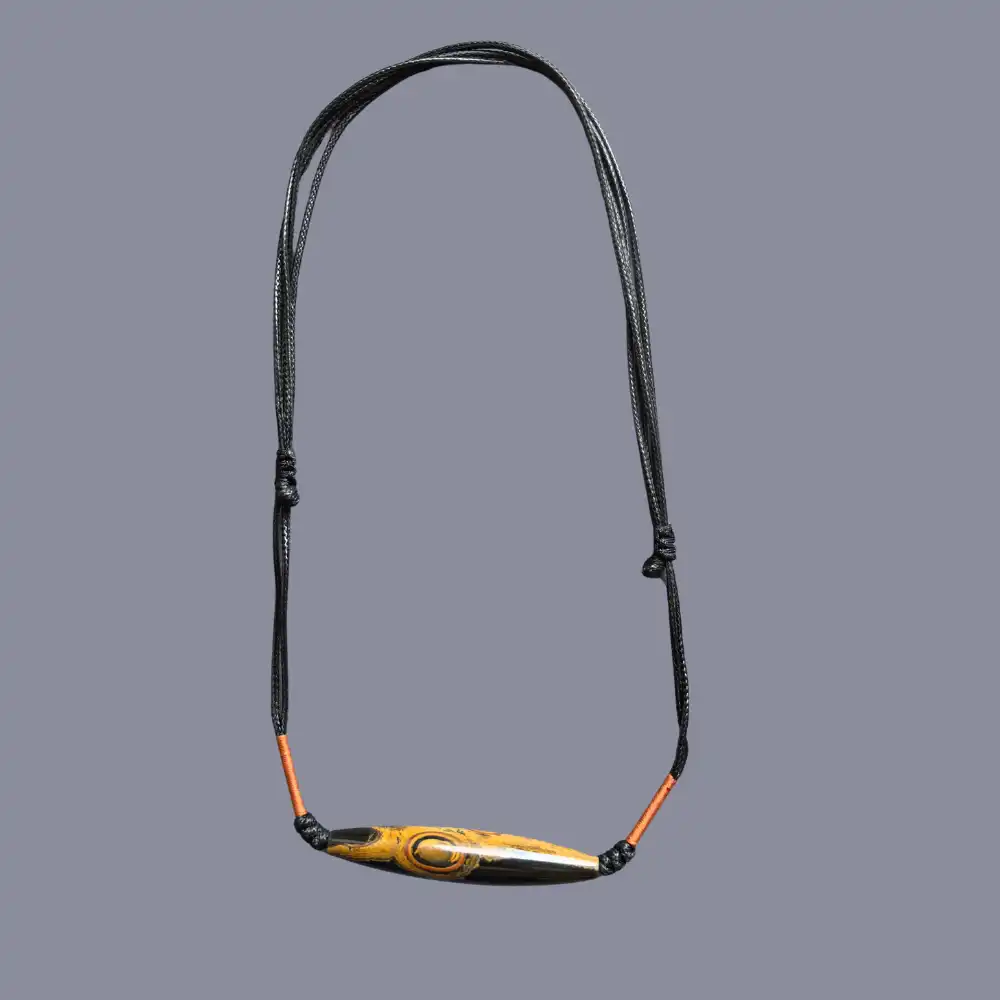
- Cord: Hand-braided black cord with copper-toned thread wrap, choker length.
- Closure: Sliding knot.
To see where this natural eye-stone family fits against patterned (etched) Dzi, see our guide: Mongolian Dzi vs Tibetan Dzi: What’s the Real Difference?
Why the Lance Shape
The long, slender lance form follows an ancient bead lineage — elongated lezi forms have been worn at the neck in Chinese and Himalayan traditions for centuries. Cut this way, the stone’s full pattern shows along the body, and the two eyes read clearly at the collarbone. Both ends of this piece taper to the stone’s natural glossy black — a quiet contrast to the warm banding at the center.
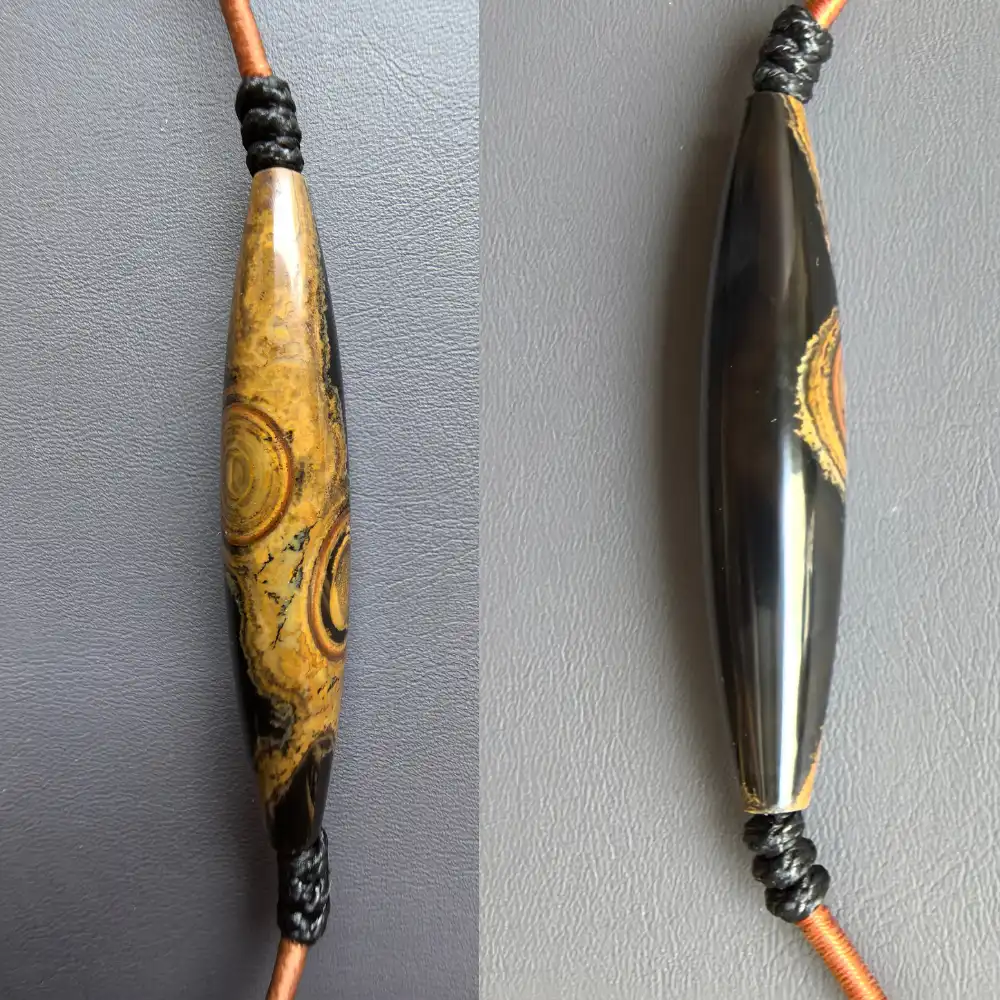
Lance-shaped lezi: the full geological pattern reads along the body of the stone.
Made by Hand, End to End
The stone is hand-polished — no molds, no machine carving. It is strung on a hand-braided black cotton cord with a copper-toned thread wrap at the top, finished with a sliding knot so the choker length adjusts easily. Because every step is handwork, each pendant carries small, honest variations in surface and pattern placement — the signature of a true one-of-one stone.
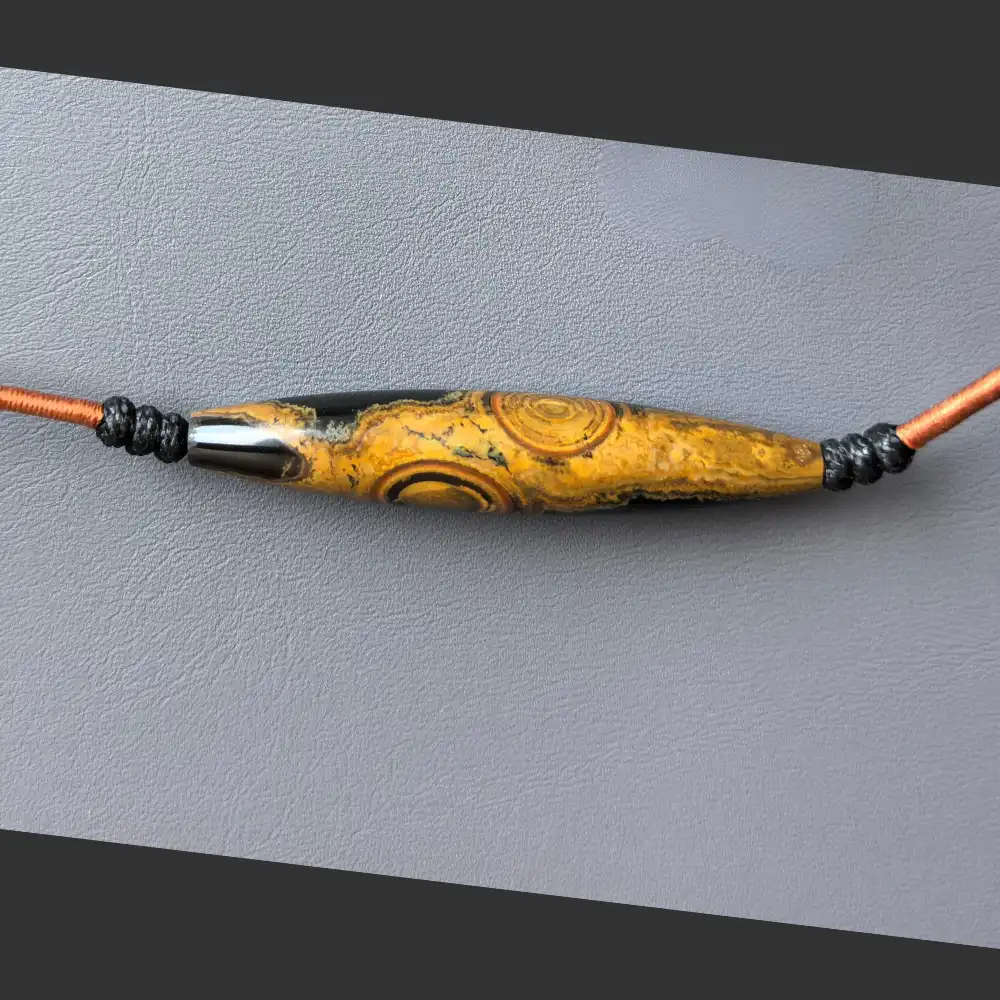
Hand-braided cord, copper-toned wrap, sliding-knot closure.
How It Wears
- One-of-a-kind — this exact pattern cannot be replicated.
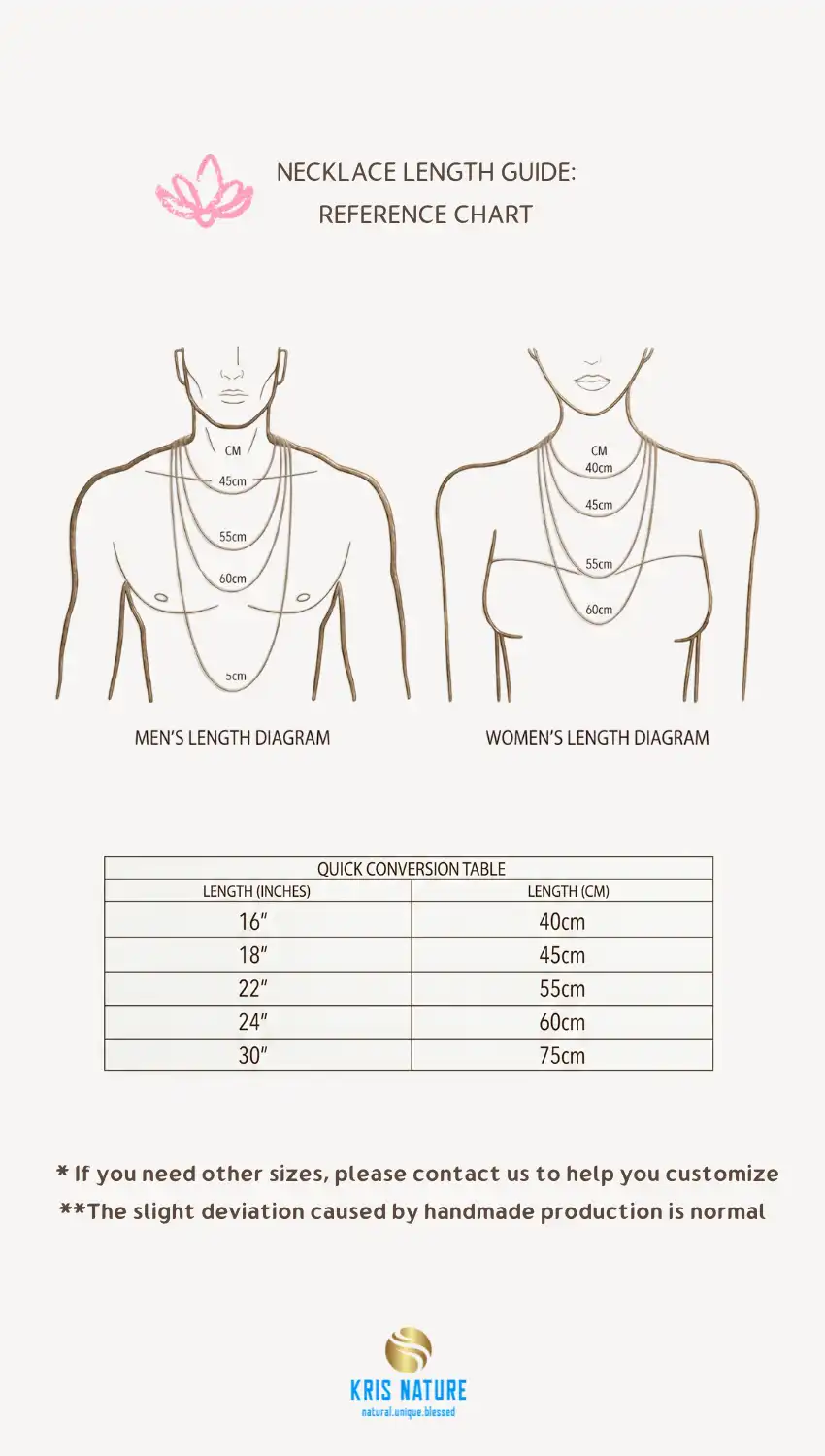
- Choker length, rests at the collarbone.
- Lightweight and comfortable for all-day wear.
- Sliding knot for an adjustable fit.
Perfect For
- Everyday wear for those drawn to natural stone and honest craft.
- Anyone who values a true geological pattern over a mass-made motif.
- Layering with other pendants or wearing alone as a focal piece.
- A meaningful gift for stones lovers, mindfulness and intention-setting.
Wear It, Layer It, Give It
A natural eye-stone sits well alone as a focal piece or layered with other natural pendants and red-cord bracelets. In regional tradition, eye patterns are carried as symbols of awareness and clear seeing — a meaningful gift for a milestone or a new beginning, or simply for someone who values honest natural material. Because the pattern is geological, no two pieces will ever match: this exact pendant exists once.
For everyday care, keep it dry, avoid perfume and chemicals, and wipe the stone with a soft cloth — see our Dzi care guide for the full routine. Curious how this natural eye-stone family fits beside crafted Tibetan-style Dzi? Read What Is a Dzi Bead? A Complete Guide.
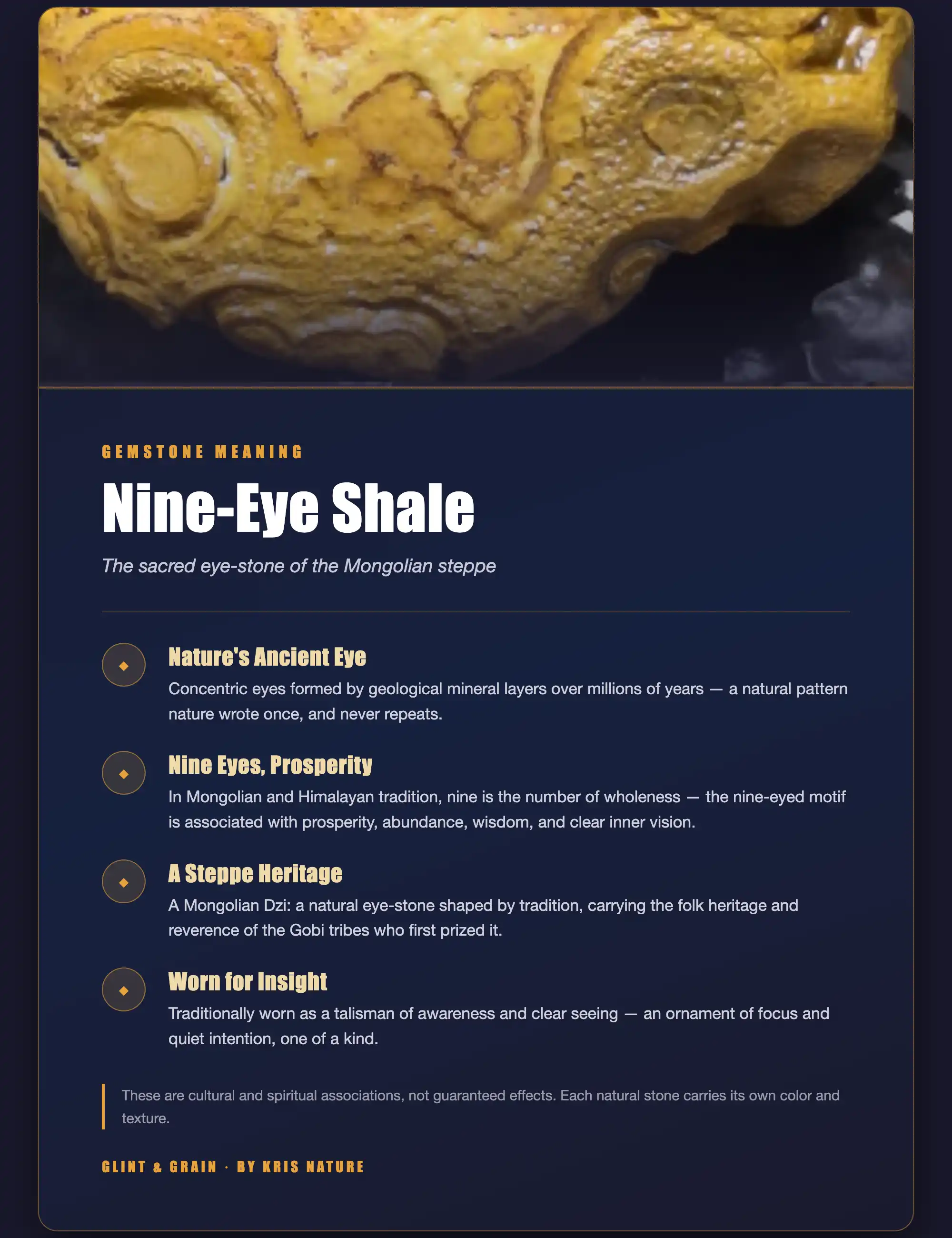
Eye-stone symbolism at a glance — cultural associations, not guaranteed effects.
Natural Stone Notice — Glint & Grain by Kris Nature. All Dzi beads and natural stones feature unique textures, mineral spots, color variations, and subtle patterns formed by nature. These are authentic characteristics, not defects. Where a stone has been enhanced (dyed, heat-treated, or otherwise processed), we disclose it openly on the product page. Returns based on natural features are not accepted as quality claims.
FAQ
What does a two-eye stone mean?
In Himalayan and East Asian folk tradition, the two-eye motif is associated with duality, balance, and clear seeing — inward and outward at once. In regional tradition, eye stones are worn as ornaments of awareness, focus, and steady insight. Cultural associations only, not guaranteed effects.
Are the eyes really natural?
Yes. The two concentric eyes on this pendant are fully formed by geological mineral deposition over millions of years. This is a genuine natural-stone pattern, honestly labeled.
Is naturally eyed material hard to find?
Well-formed natural eye-stone has become increasingly scarce. This material comes from deposits in Inner Mongolia, where local authorities actively protect them and prohibit unauthorized digging. We only carry pieces we can authenticate as genuine natural stone, honestly labeled.
Is the stone healing or does it have spiritual power?
We share cultural and symbolic meanings only. The eye motif is traditionally associated with awareness and focus, but we make no claim that it heals, protects, or guarantees any effect.
Can I wear it every day?
Yes — it is lightweight and durable. Avoid prolonged water, perfume and direct sunlight, and wipe gently with a soft cloth after wear.
Will the piece look exactly like the photos?
Yes and no — it is a one-of-one natural stone photographed individually. The exact eye pattern you receive is the piece shown, though natural stones vary slightly in tone and mineral spots.
Is there any religious or magical guarantee?
No. These are cultural and spiritual associations, not guaranteed effects.
Is this piece treated or color-enhanced?
No. This pendant is natural and untreated — the two eyes and the ochre-gold, rust-red, and deep black colors are exactly as the stone was found. When any piece in our shop has been heat-treated or color-enhanced, we say so openly on its page; this one carries no enhancement at all.
Can I adjust the cord length?
Yes. The cord closes with a sliding knot, so you can adjust the choker length easily before wearing. If you would like a different cord length or a custom cord, message us before ordering and we will make it up for you.
-300x300.webp)
-300x300.webp)